 Dịch
Dịch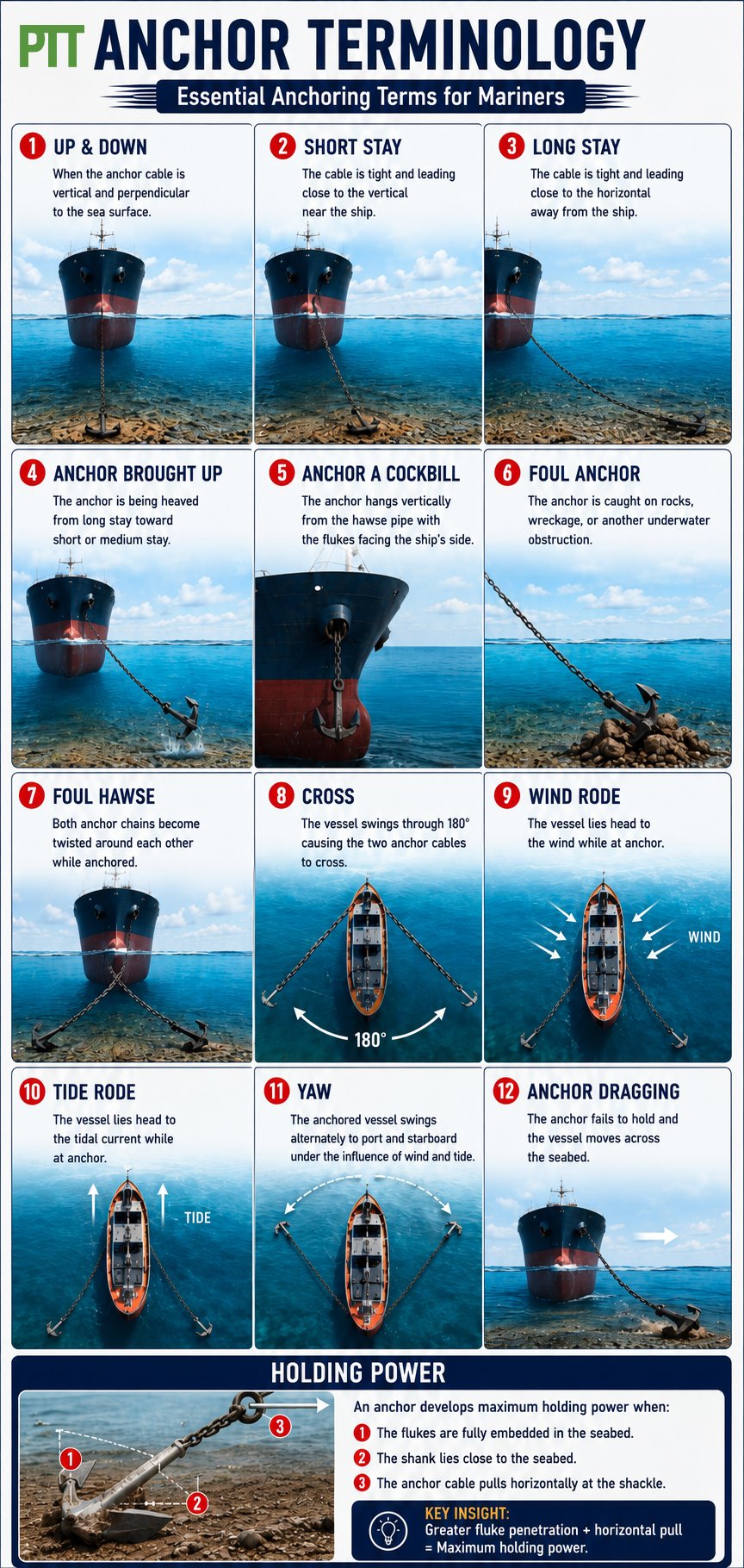
- Anchor Terminology Every Seafarer Should Know ⚓🚢
Anchoring is more than just dropping an anchor—it's a critical shiphandling operation that requires a clear understanding of standard maritime terminology. Knowing these terms helps ensure safe anchoring, effective communication on the bridge, and proper seamanship.
- Essential Anchor Terms: ⚓ Up & Down – Anchor cable is vertical, ready to break free from the seabed.
- Short Stay – Cable is nearly vertical and leading close to the ship.
- Long Stay – Cable leads away from the ship at a shallow angle.
- Anchor A-Cockbill – Anchor hangs clear of the hawse pipe, ready for letting go.
- Foul Anchor – Anchor is caught on an underwater obstruction.
- Foul Hawse – Anchor cables become twisted around each other.
- Wind Rode – Vessel lies head to the wind.
- Tide Rode – Vessel lies head to the tidal current.
- Yaw – Vessel swings from side to side due to wind and current.
- Anchor Dragging – Anchor loses its grip and the vessel moves across the seabed.
- Key Seamanship Tip:
An anchor develops its maximum holding power when its flukes are fully embedded in the seabed and the anchor cable pulls as horizontally as possible.
- Save this post for your anchoring revision and share it with fellow seafarers preparing for bridge watchkeeping or oral exams!