
 Dịch
Dịch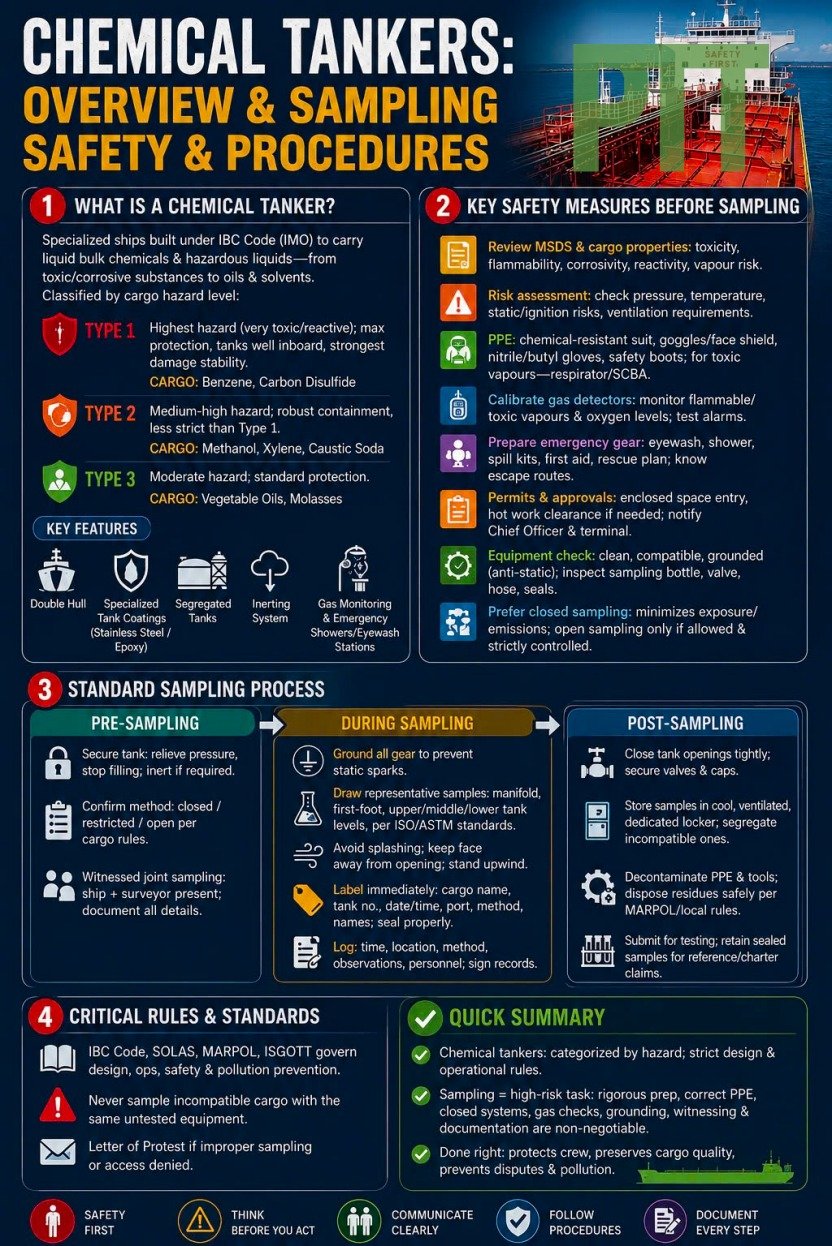
1⃣ What Is a Chemical Tanker?
Specialized ships built under IBC Code (IMO) to carry liquid bulk chemicals & hazardous liquids—from toxic/corrosive substances to oils & solvents. Classified by cargo hazard level:
- Type 1: Highest hazard (very toxic/reactive); max protection, tanks well inboard, strongest damage stability. Cargo: benzene, carbon disulfide.
- Type 2: Medium-high hazard; robust containment, less strict than Type 1. Cargo: methanol, xylene, caustic soda.
- Type 3: Moderate hazard; standard protection. Cargo: vegetable oils, molasses.
Key features: Double hull, specialized tank coatings (stainless steel/epoxy), segregated tanks, inerting, gas monitoring, emergency showers/eyewash stations.
2⃣ Key Safety Measures Before Sampling
- Review MSDS & cargo properties: toxicity, flammability, corrosivity, reactivity, vapour risk.
- Risk assessment: check pressure, temperature, static/ignition risks, ventilation requirements.
- PPE: chemical-resistant suit, goggles/face shield, nitrile/butyl gloves, safety boots; for toxic vapours—respirator/SCBA.
- Calibrate gas detectors: monitor flammable/toxic vapours & oxygen levels; test alarms.
- Prepare emergency gear: eyewash, shower, spill kits, first aid, rescue plan; know escape routes.
- Permits & approvals: enclosed space entry, hot work clearance if needed; notify Chief Officer & terminal.
- Equipment check: clean, compatible, grounded (anti-static); inspect sampling bottle, valve, hose, seals.
- Prefer closed sampling: minimizes exposure/emissions; open sampling only if allowed & strictly controlled.
3⃣ Standard Sampling Process
Pre-sampling
- Secure tank: relieve pressure, stop filling; inert if required .
- Confirm method: closed / restricted / open per cargo rules.
- Witnessed joint sampling: ship + surveyor present; document all details.
During sampling
- Ground all gear to prevent static sparks.
- Draw representative samples: manifold, first-foot, upper/middle/lower tank levels, per ISO/ASTM standards.
- Avoid splashing; keep face away from opening; stand upwind .
- Label immediately: cargo name, tank no., date/time, port, method, names; seal properly.
- Log: time, location, method, observations, personnel; sign records.
Post-sampling
- Close tank openings tightly; secure valves & caps .
- Store samples in cool, ventilated, dedicated locker; segregate incompatible ones.
- Decontaminate PPE & tools; dispose residues safely per MARPOL/local rules.
- Submit for testing; retain sealed samples for reference/charter claims.
4⃣ Critical Rules & Standards
- IBC Code, SOLAS, MARPOL, ISGOTT govern design, ops, safety & pollution prevention.
- Never sample incompatible cargo with same untested equipment.
- Letter of Protest if improper sampling or access denied.
Quick Summary
- Chemical tankers: categorized by hazard; strict design & operational rules.
- Sampling = high-risk task: rigorous prep, correct PPE, closed systems, gas checks, grounding, witnessing & documentation are non‑negotiable.
- Done right: protects crew, preserves cargo quality, prevents disputes & pollution.
#highlightseveryone #deckknowledge #ship #viewers #highlight #follower #everyone #Seafarer #SEAMAN