
 Dịch
Dịch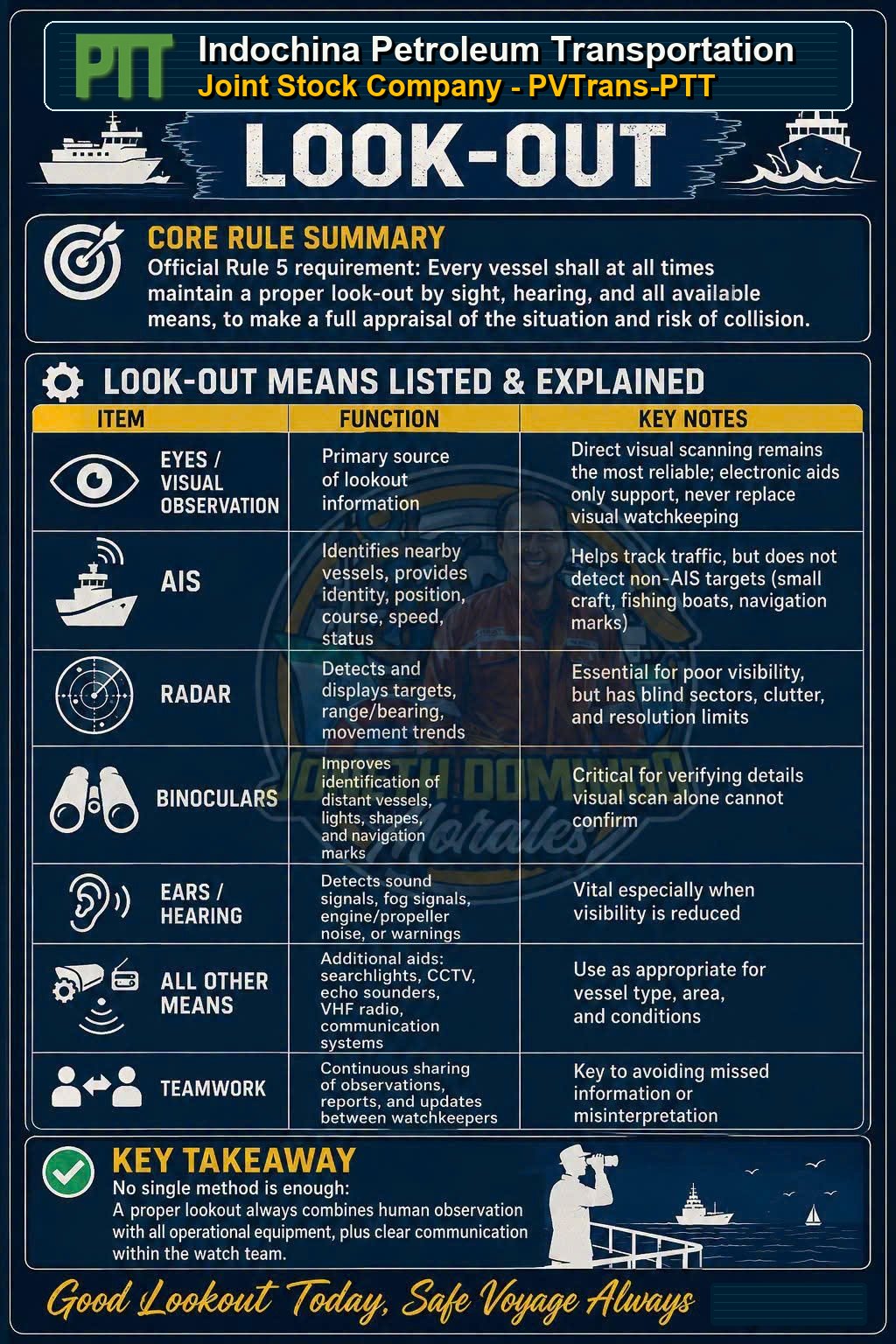
???????? COLREGs Rule 5: ⚓
????The Proper Lookout –Your First Line of Defense????
???? Core Rule Summary
????️ Official Rule 5 requirement: Every vessel shall at all times maintain a proper look‑out by sight, hearing, and all available means, to make a full appraisal of the situation and risk of collision.
????️ Look‑out Means Listed & Explained
Item Function Key Notes
????️ EYES / Visual Observation Primary source of lookout information Direct visual scanning remains the most reliable; electronic aids only support, never replace visual watchkeeping
???? AIS Identifies nearby vessels, provides identity, position, course, speed, status Helps track traffic, but does not detect non‑AIS targets (small craft, fishing boats, navigation marks)
???? RADAR Detects and displays targets, range/bearing, movement trends Essential for poor visibility, but has blind sectors, clutter, and resolution limits
???? BINOCULARS Improves identification of distant vessels, lights, shapes, and navigation marks Critical for verifying details visual scan alone cannot confirm
???? EARS / Hearing Detects sound signals, fog signals, engine/propeller noise, or warnings Vital especially when visibility is reduced
⚙️ ALL OTHER MEANS Additional aids: searchlights, CCTV, echo sounders, VHF radio, communication systems Use as appropriate for vessel type, area, and conditions
???? TEAMWORK Continuous sharing of observations, reports, and updates between watchkeepers Key to avoiding missed information or misinterpretation
✅ Key Takeaway
No single method is enough: A proper lookout always combines human observation with all operational equipment, plus clear communication within the watch team. The poster’s closing line — “Good Lookout Today, Safe Voyage Always” — emphasizes this as the foundation of collision prevention.