
 Dịch
Dịch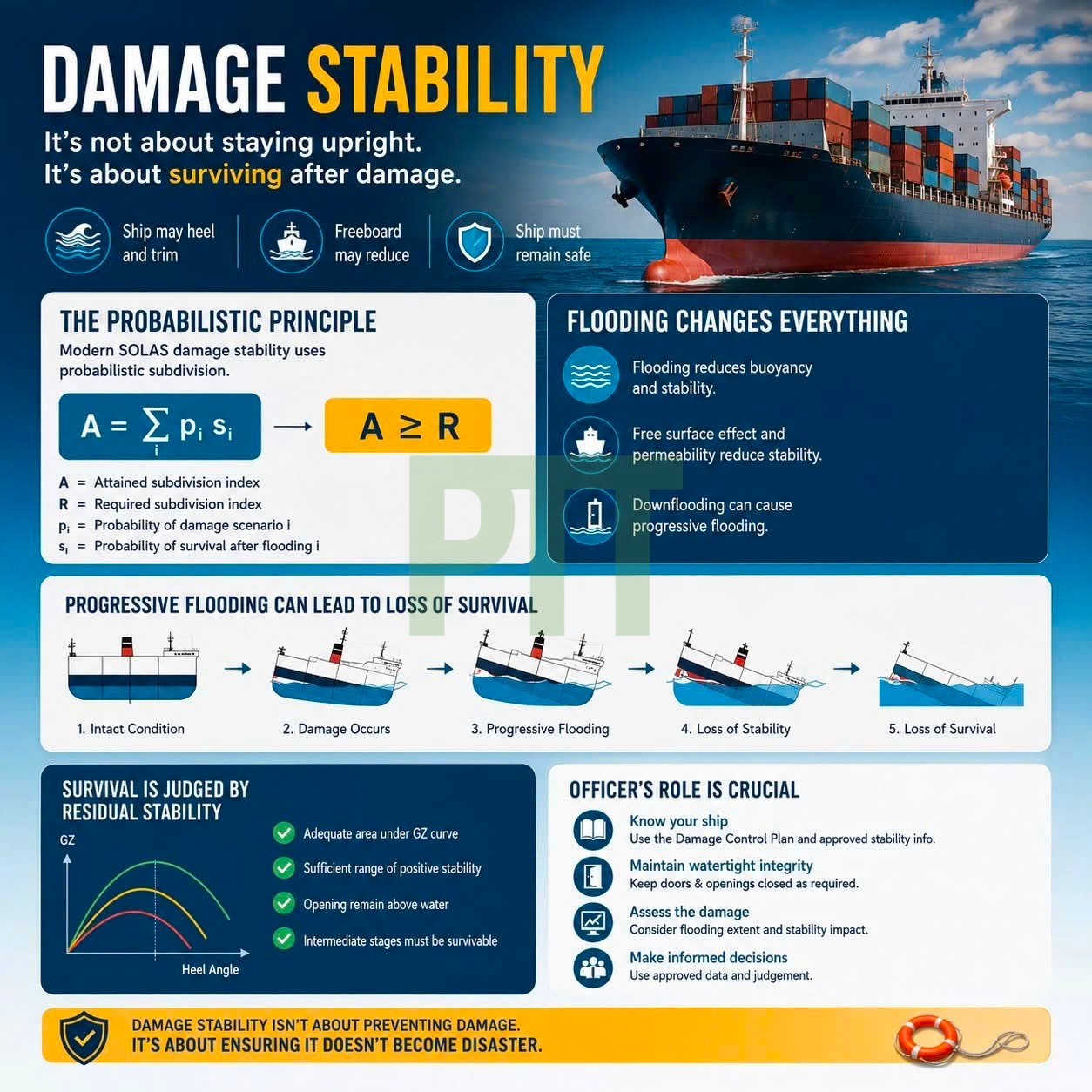

Damage stability isn't about keeping a ship perfectly upright—it's about ensuring the vessel remains afloat and survivable after flooding caused by hull damage.
When a compartment is breached, the ship may experience heel, trim, and reduced freeboard. The real challenge is preventing progressive flooding and maintaining enough residual stability to safely withstand the damage.
Key principles of damage stability:
Flooding reduces buoyancy and stability.
Watertight subdivision limits the spread of water.
Progressive flooding is one of the greatest threats to a damaged ship.
Residual stability determines whether the ship can survive after damage.
Maintaining watertight integrity is essential throughout the emergency.
Modern SOLAS regulations use a probabilistic damage stability approach, where a ship must demonstrate an acceptable probability of surviving various damage scenarios. This ensures vessels are designed not only to float, but to remain safe long enough for effective emergency response and evacuation if necessary.
Every officer and crew member plays a critical role by:
Understanding the ship's Damage Control Plan.
Keeping watertight doors and openings properly secured.
Continuously assessing flooding and stability conditions.
Making informed decisions based on approved stability information.
A well-designed ship is only as effective as the crew operating it. Knowledge, preparation, and disciplined damage control can make the difference between a manageable incident and a catastrophic loss.
Damage stability isn't about preventing every accident—it's about ensuring the ship has the best possible chance to survive when an accident happens.
#Maritime #Shipping #MerchantNavy #MarineEngineering #NavalArchitecture #ShipStability #DamageStability #SOLAS #IMO #MarineSafety #ShipDesign #CargoShip #Seafarers #BridgeTeam #MarineEducation