
 Dịch
Dịch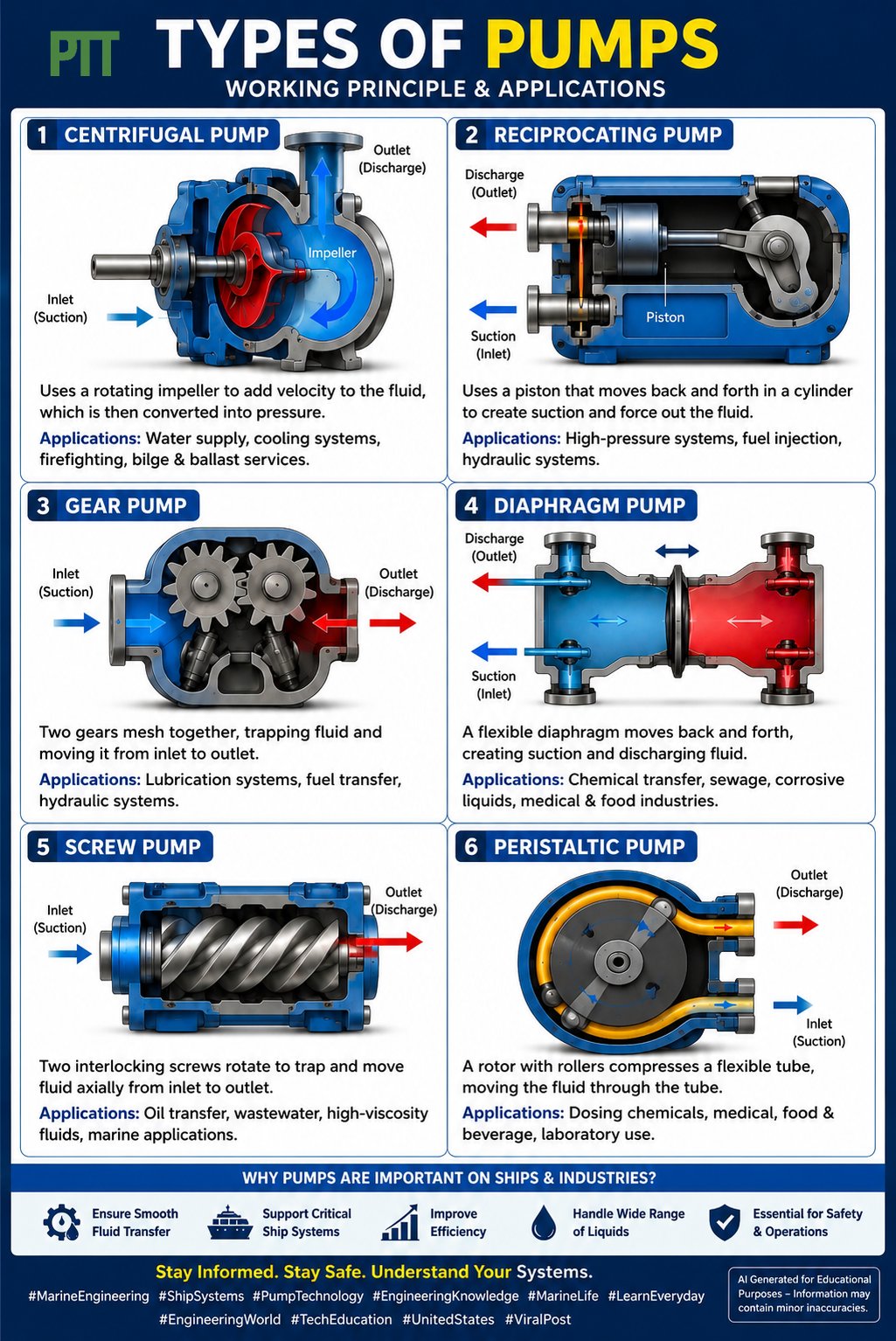
Discover how different pumps power ships and industries around the world. Which pump type do you think is the most important in marine engineering?
17 . ⚠️ SAFETY REMINDER: NEVER RELY BLINDLY ON RADAR/ARPA
RADAR and ARPA are powerful navigational aids, but the Officer of the Watch must never overestimate the accuracy of the information displayed.
Always maintain a proper lookout and use all available means to assess the situation.
📡 Radar information may be affected by:
Sea clutter and rain clutter.
False or multiple echoes.
Shadow sectors and blind areas.
Reflections from the vessel’s structures.
Incorrect gain, clutter or range settings.
Weak or intermittent target detection.
- ARPA information may become unreliable when:
Targets pass too close to each other.
Own ship or the target alters course or speed.
Tracking has only recently started.
Sensor inputs are inaccurate.
The target echo is lost or transferred.
Insufficient time has passed for reliable vector calculation.
Remember: ARPA predicts future target movement from previously measured data. After any course or speed alteration, CPA, TCPA and vectors may take time to stabilise.
👀 The OOW must:
- Maintain a proper visual and auditory lookout.
- Observe targets continuously and systematically.
- Check ARPA data against the raw radar picture.
- Use suitable range scales and radar settings.
- Compare information from both radars when available.
- Use visual bearings, compass bearings, AIS and other available information appropriately.
- Treat doubtful information cautiously.
- Call the Master whenever required by the standing orders or the situation.
Eyes + Ears + Equipment + Experience = Safe Navigation
Radar assists the navigator—it never replaces professional judgement or a proper lookout.