
 Dịch
Dịch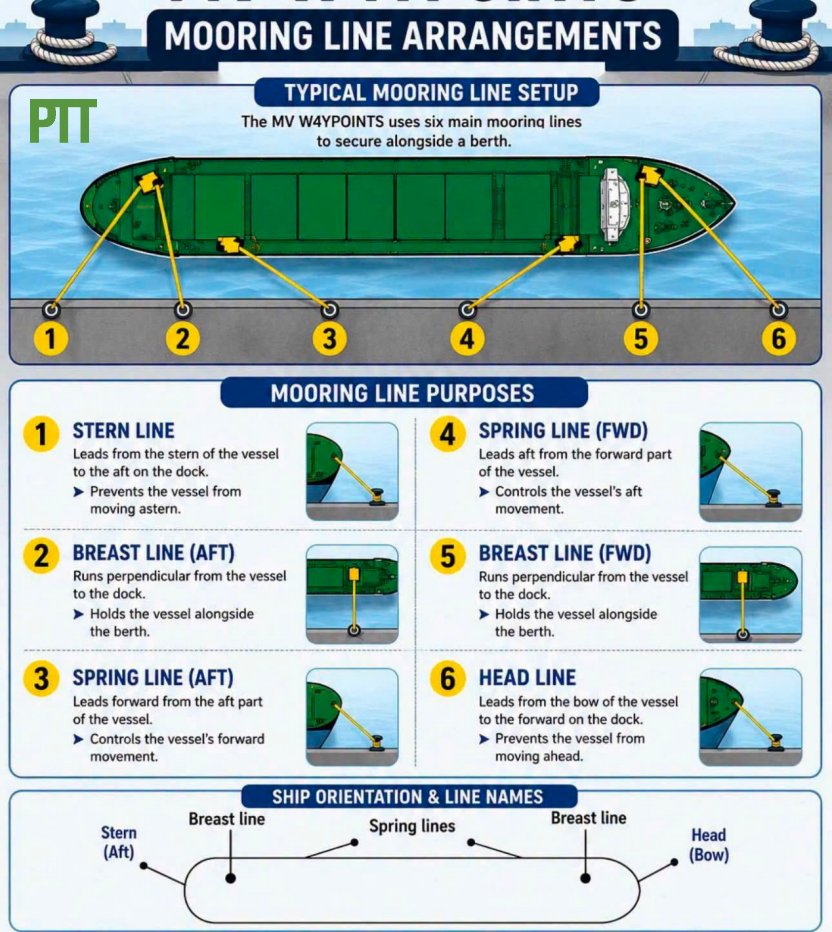
Mooring Line Arrangements - Basic Things To Know ✅⚓️
Mooring line arrangements are used to keep a vessel safely secured alongside a berth while minimizing movement caused by wind, current, tides, and passing vessels. Each mooring line has a specific function to maintain the ship’s position and ensure safe cargo operations.
1. Stern Line
- Runs from the stern to the dock.
- Prevents the vessel from moving astern (backward).
2. Aft Breast Line
- Runs perpendicular from the aft section to the berth.
- Keeps the vessel close alongside the quay and resists sideways movement.
3. Aft Spring Line
- Leads forward from the stern.
- Prevents the vessel from moving ahead (forward).
4. Forward Spring Line
- Leads aft from the bow.
- Prevents the vessel from moving astern (backward).
5. Forward Breast Line
- Runs perpendicular from the forward section to the berth.
- Holds the vessel firmly alongside the dock and limits lateral movement.
6. Head Line
- Runs from the bow to the forward bollard on the dock.
- Prevents the vessel from moving ahead.
- Key Points
- Head and stern lines control longitudinal movement.
- Breast lines keep the vessel alongside the berth.
- Spring lines prevent fore-and-aft movement and absorb forces from wind and current.
- Proper tension and regular monitoring of all mooring lines are essential for safe mooring operations and to avoid excessive stress on the lines and fittings.