
 Dịch
Dịch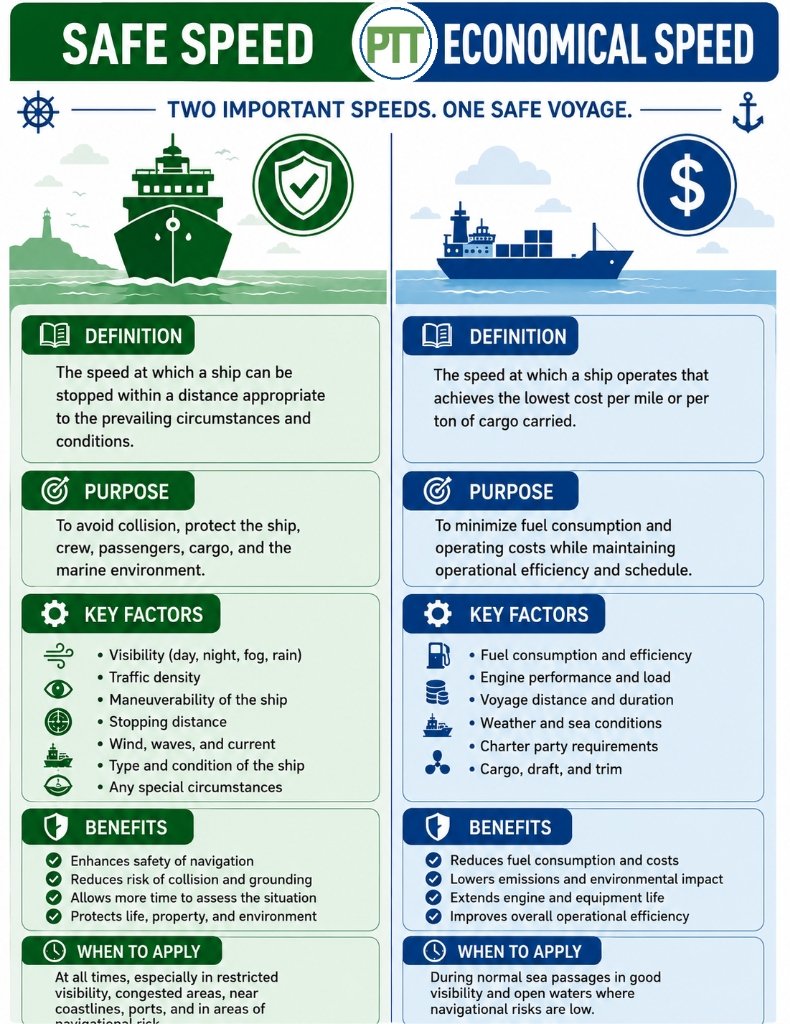
✅Safe Speed is the speed at which a vessel can take proper and effective action to avoid collision and be stopped within an appropriate distance based on the prevailing circumstances and conditions. It is required under COLREG Rule 6 and is determined by factors such as visibility, traffic density, maneuverability, weather, sea state, and stopping distance. The primary objective of safe speed is to protect life, the ship, cargo, and the marine environment.
✅Economical Speed is the operating speed that minimizes fuel consumption and overall voyage costs while maintaining schedule efficiency. It considers factors such as fuel efficiency, engine performance, voyage distance, weather conditions, cargo load, draft, trim, and charter party requirements. The goal is to reduce operating expenses, lower emissions, and extend engine life without compromising safety.
✅Key Difference
• Safe Speed prioritizes navigation safety and is adjusted according to the prevailing conditions.
• Economical Speed prioritizes cost efficiency and fuel savings but must never override the requirement to maintain a safe speed.
✅Remember
A professional navigator always ensures that safety comes first. While economical speed helps reduce costs and improve efficiency, the vessel must always proceed at a safe speed appropriate to the existing conditions. Safety should never be sacrificed for fuel savings or schedule requirements.
#PTT #basicthingstoknow #maritimeknowledge