
 Dịch
Dịch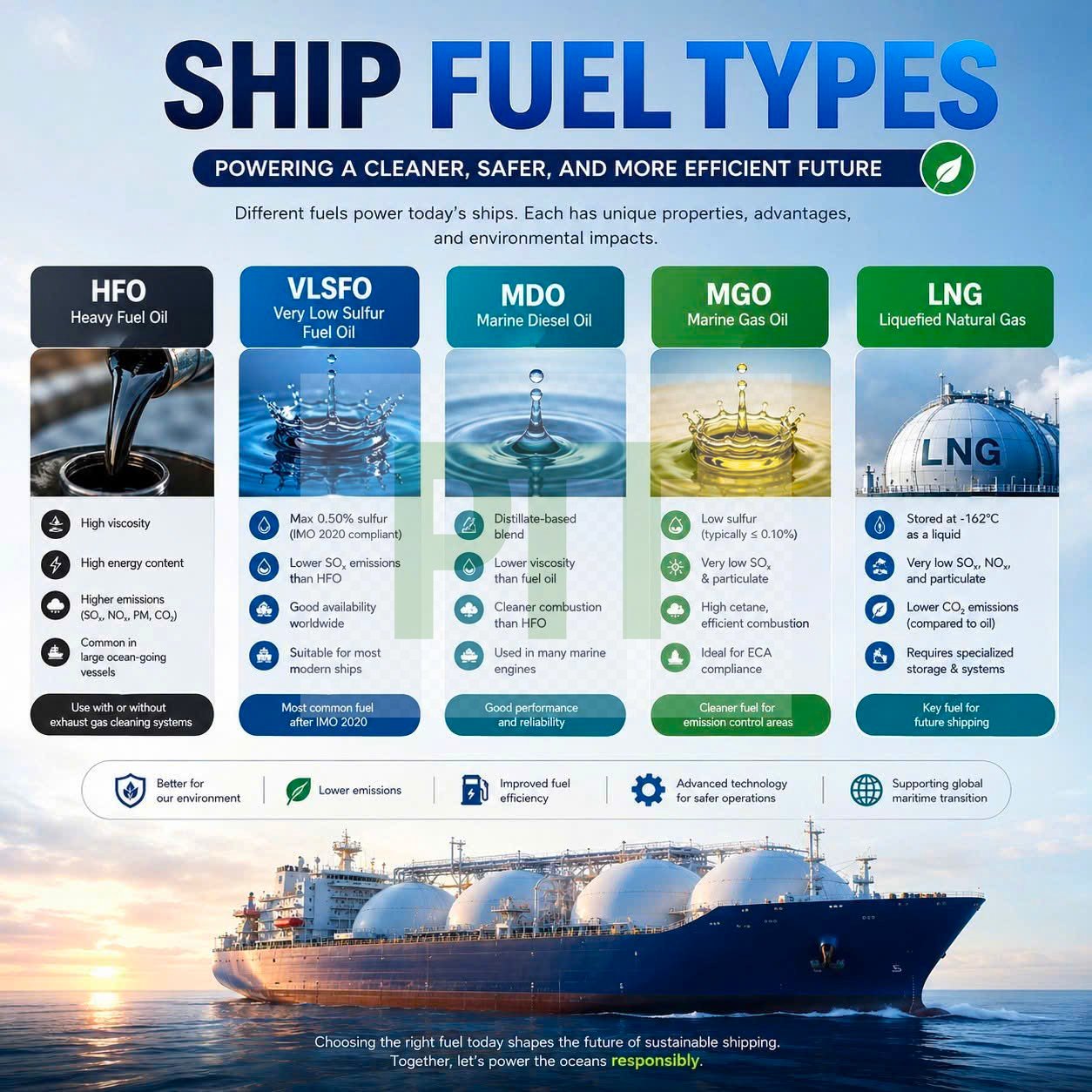
🚢 SHIP FUEL TYPES: POWERING THE GLOBAL FLEET 🌍
Not all ships use the same fuel. Each marine fuel has unique characteristics that affect engine performance, operating costs, emissions, and compliance with international environmental regulations.
Here's a quick overview:
🛢️ HFO (Heavy Fuel Oil)
High-viscosity residual fuel with high energy density. Widely used on large ocean-going vessels but produces higher SOₓ, NOₓ, and particulate emissions unless paired with exhaust gas cleaning systems.
⚓ VLSFO (Very Low Sulfur Fuel Oil)
Contains a maximum sulfur content of 0.50%, making it compliant with IMO 2020 regulations. It has become the most common marine fuel for ships operating without scrubbers.
⚙️ MDO (Marine Diesel Oil)
A marine distillate fuel with lower viscosity than HFO, providing cleaner combustion and reliable performance for a wide range of marine engines.
🌊 MGO (Marine Gas Oil)
A premium low-sulfur distillate fuel commonly used in Emission Control Areas (ECAs). It offers significantly lower SOₓ and particulate emissions while improving combustion efficiency.
💨 LNG (Liquefied Natural Gas)
Stored at approximately −162°C, LNG produces very low sulfur and particulate emissions while reducing CO₂ compared to conventional fuel oils. However, it requires specialized storage systems and dedicated engine technology.
⚠️ Did You Know?
There is no single "best" marine fuel. The ideal choice depends on vessel type, engine design, trading routes, fuel availability, operating costs, and environmental regulations.
🌍 As the maritime industry moves toward decarbonization, cleaner fuels and innovative propulsion technologies will continue shaping the future of global shipping.
💬 Which marine fuel do you think will dominate the shipping industry over the next decade? Share your thoughts below!