
 Dịch
Dịch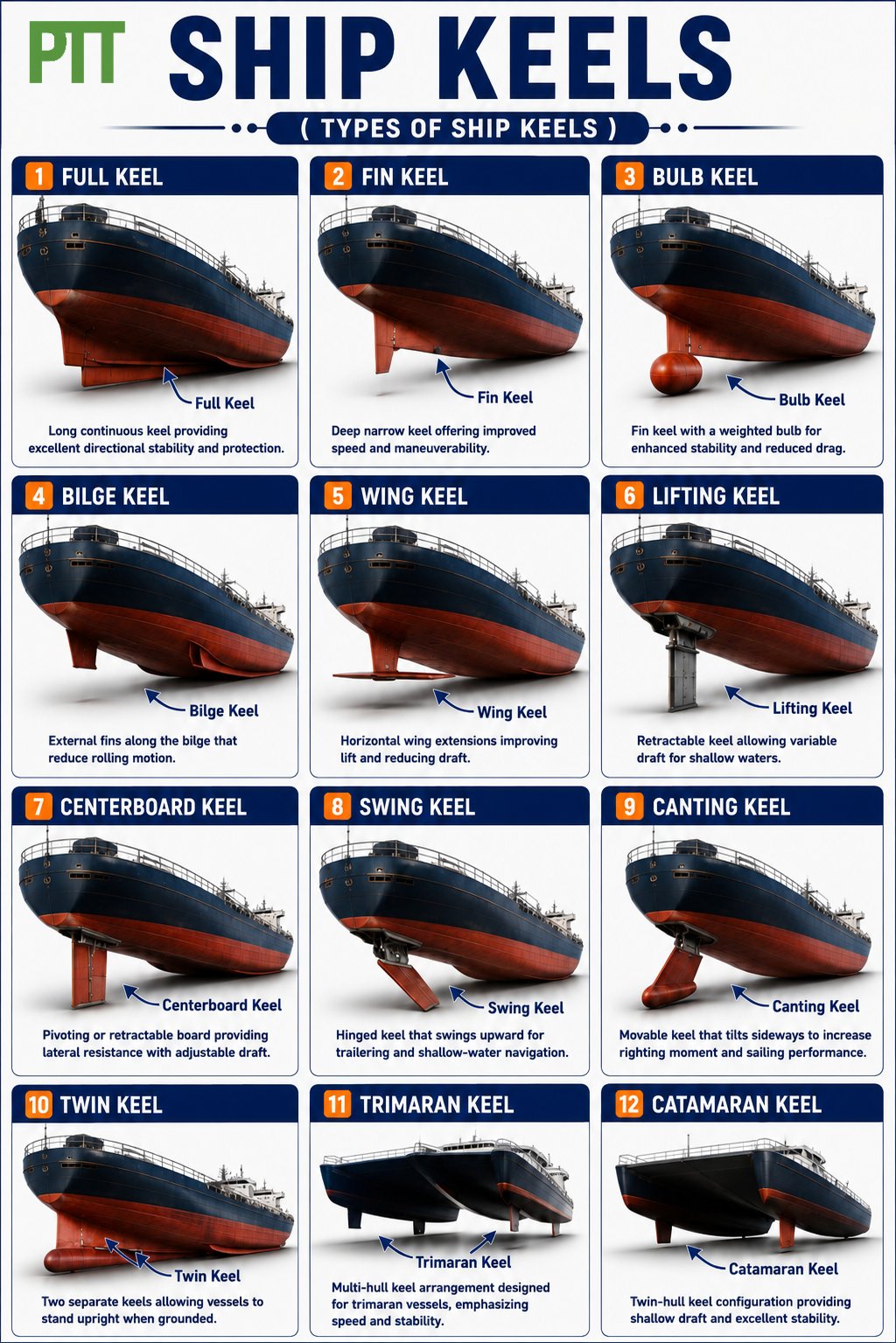
- Ship Keels – The Backbone of Every Vessel 🚢
The keel is the primary structural member running along the bottom of a ship. It provides strength, stability, directional control, and resistance against rolling and drifting. Different keel designs are used depending on a vessel's purpose, operating area, and performance requirements.
- Common Types of Ship Keels:
1️⃣ Full Keel – Long continuous keel offering excellent directional stability and hull protection.
2️⃣ Fin Keel – Deep, narrow keel that improves speed, maneuverability, and sailing performance.
3️⃣ Bulb Keel – Fin keel fitted with a weighted bulb to lower the center of gravity and increase stability.
4️⃣ Bilge Keel – External fins fitted along the bilge area to reduce rolling motions in rough seas.
5️⃣ Wing Keel – Features horizontal wing-like extensions that improve lift and reduce draft.
6️⃣ Lifting Keel – Retractable keel allowing vessels to operate in both deep and shallow waters.
7️⃣ Centerboard Keel – Adjustable board that can be raised or lowered to vary draft and improve lateral resistance.
8️⃣ Swing Keel – Hinged keel that pivots upward for trailering and shallow-water navigation.
9️⃣ Canting Keel – Movable keel that tilts sideways to increase righting moment and sailing efficiency.
🔟 Twin Keel – Two separate keels enabling a vessel to remain upright when grounded at low tide.
1️⃣1️⃣ Trimaran Keel – Keel arrangement designed for trimaran vessels, providing high speed and stability.
1️⃣2️⃣ Catamaran Keel – Shallow-draft keel configuration used on twin-hull vessels for excellent stability.
💡 Did You Know? While sailing yachts commonly use fin, bulb, and canting keels, large commercial ships primarily rely on a structural keel as the vessel's backbone, with bilge keels often installed to reduce rolling.
📘 Understanding keel designs helps mariners appreciate how ships maintain stability, efficiency, and seaworthiness in different operating conditions.