
 Dịch
Dịch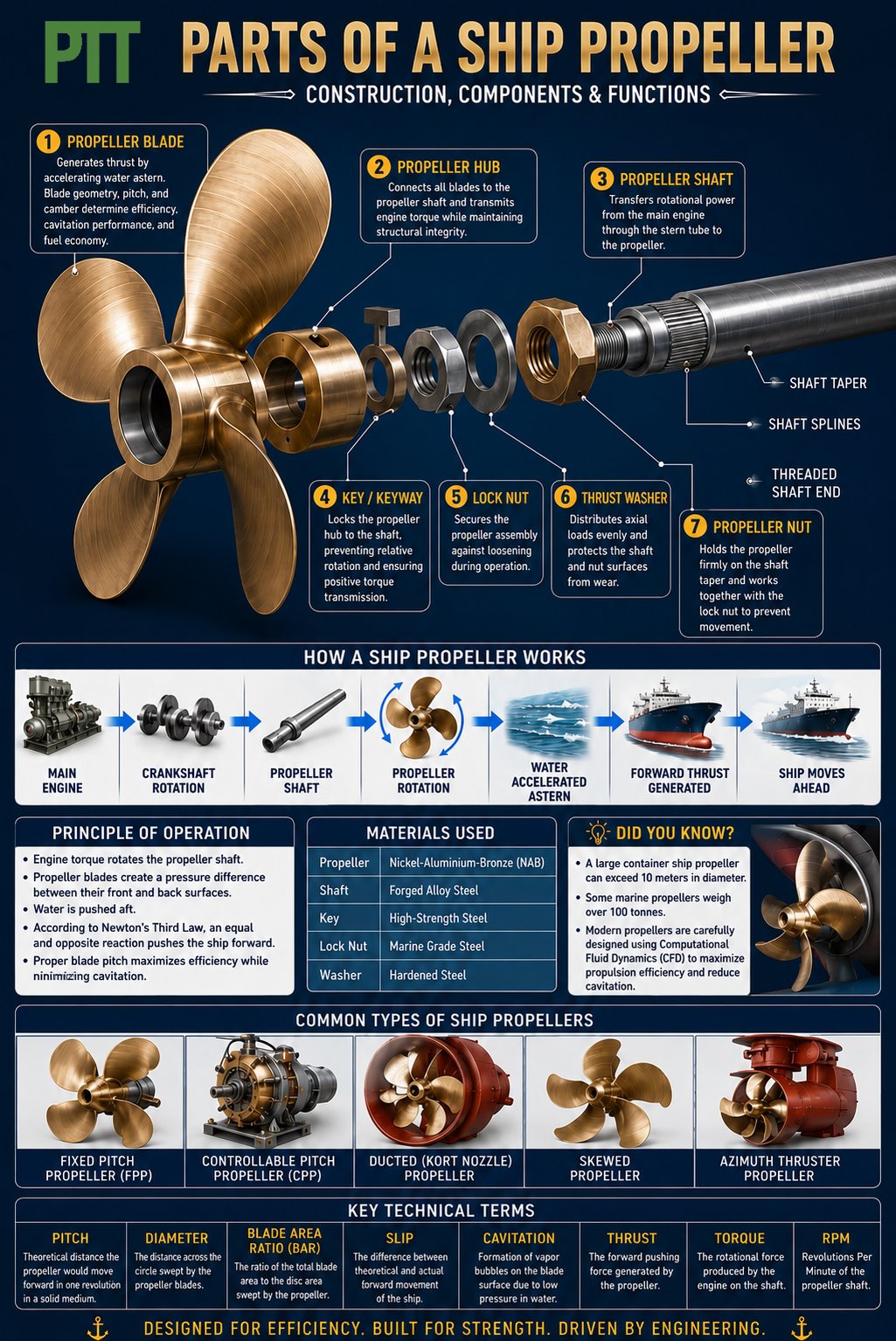
A ship's propeller is the final link in the propulsion system, converting the engine's rotational power into thrust that moves the vessel through the water. Its design and efficiency have a direct impact on a ship's speed, fuel consumption, and overall performance.
Main Components:
- Propeller Blades – Generate thrust by accelerating water astern
- Propeller Hub – Connects the blades and transfers engine torque
- Propeller Shaft – Delivers rotational power from the main engine
- Key & Keyway – Prevents relative movement between the shaft and hub
- Lock Nut & Propeller Nut – Secure the propeller assembly in place
- Thrust Washer – Distributes axial loads and protects contact surfaces
How It Works
The main engine rotates the propeller shaft, causing the propeller to spin. As the blades push water backward, an equal and opposite reaction force drives the ship forward, following Newton's Third Law of Motion.
Did You Know?
- Large merchant ship propellers can exceed 10 metres in diameter.
- Most propellers are made from Nickel-Aluminium Bronze (NAB) for excellent strength and corrosion resistance.
- Proper propeller design helps reduce cavitation, improve fuel efficiency, and enhance vessel performance.
Save this post to expand your marine engineering knowledge and share it with fellow seafarers!