
 Dịch
Dịch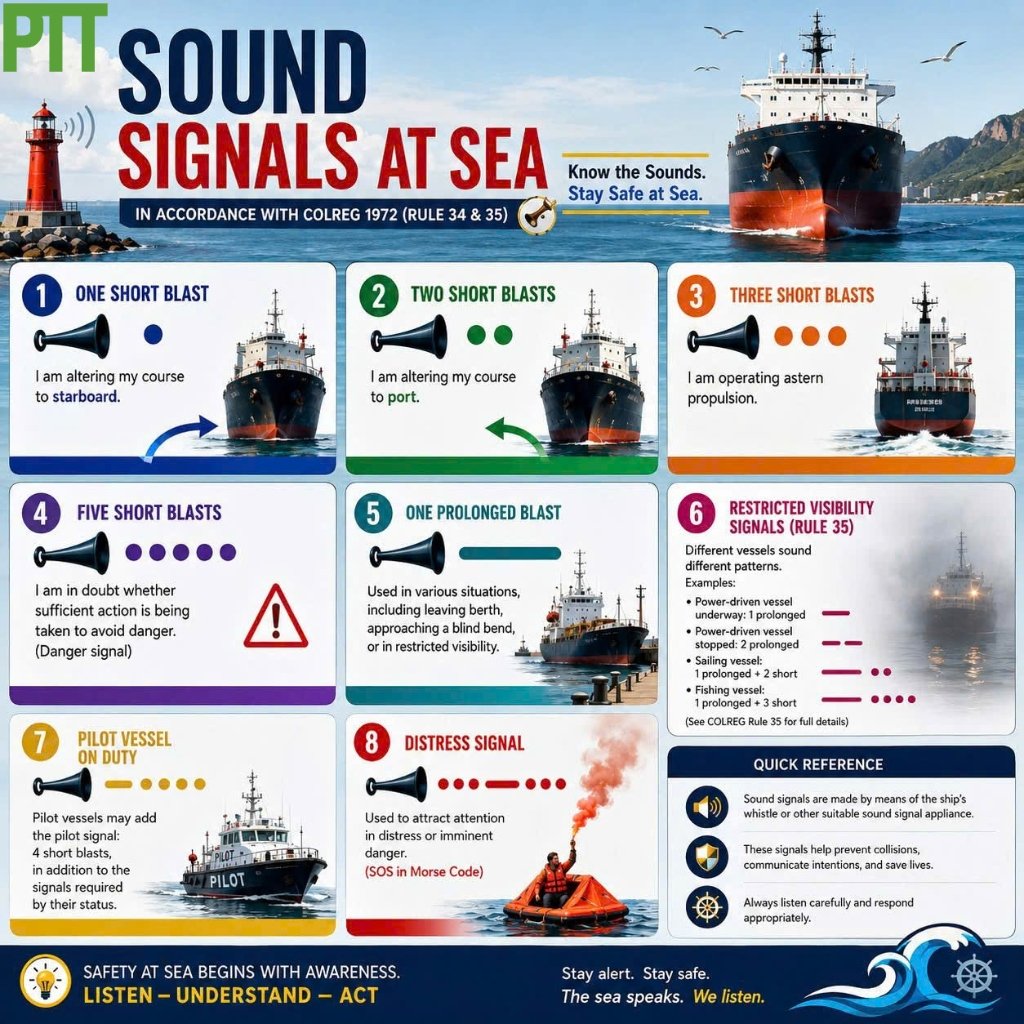
Effective communication is essential for safe navigation, and sound signals play a vital role when vessels operate in close proximity or under restricted visibility. The International Regulations for Preventing Collisions at Sea (COLREG 1972), Rules 34 & 35, establish standardized whistle signals to clearly communicate a vessel's intentions.
This infographic highlights several important sound signals, including:
???? One Short Blast – Altering course to starboard
???? Two Short Blasts – Altering course to port
???? Three Short Blasts – Operating astern propulsion
???? Five Short Blasts – Danger signal, indicating doubt about another vessel's intentions or actions
???? One Prolonged Blast – Used in specific situations such as restricted visibility, leaving a berth, or approaching an obscured bend where required by the COLREGs
???? Restricted Visibility Signals – Different vessel types use different sound patterns in accordance with Rule 35
???? Pilot Vessel Signal – A pilot vessel engaged on pilotage duty may sound four short blasts in addition to the sound signal required for its navigational status
???? Distress Signal (SOS) – Three short blasts, one prolonged blast, and three short blasts, repeated to indicate distress.
Understanding these internationally recognized sound signals helps improve situational awareness, enhances bridge communication, and contributes to safer navigation for everyone at sea.
⚓ Safe navigation begins with clear communication. Learn the signals, understand their meaning, and always navigate responsibly.