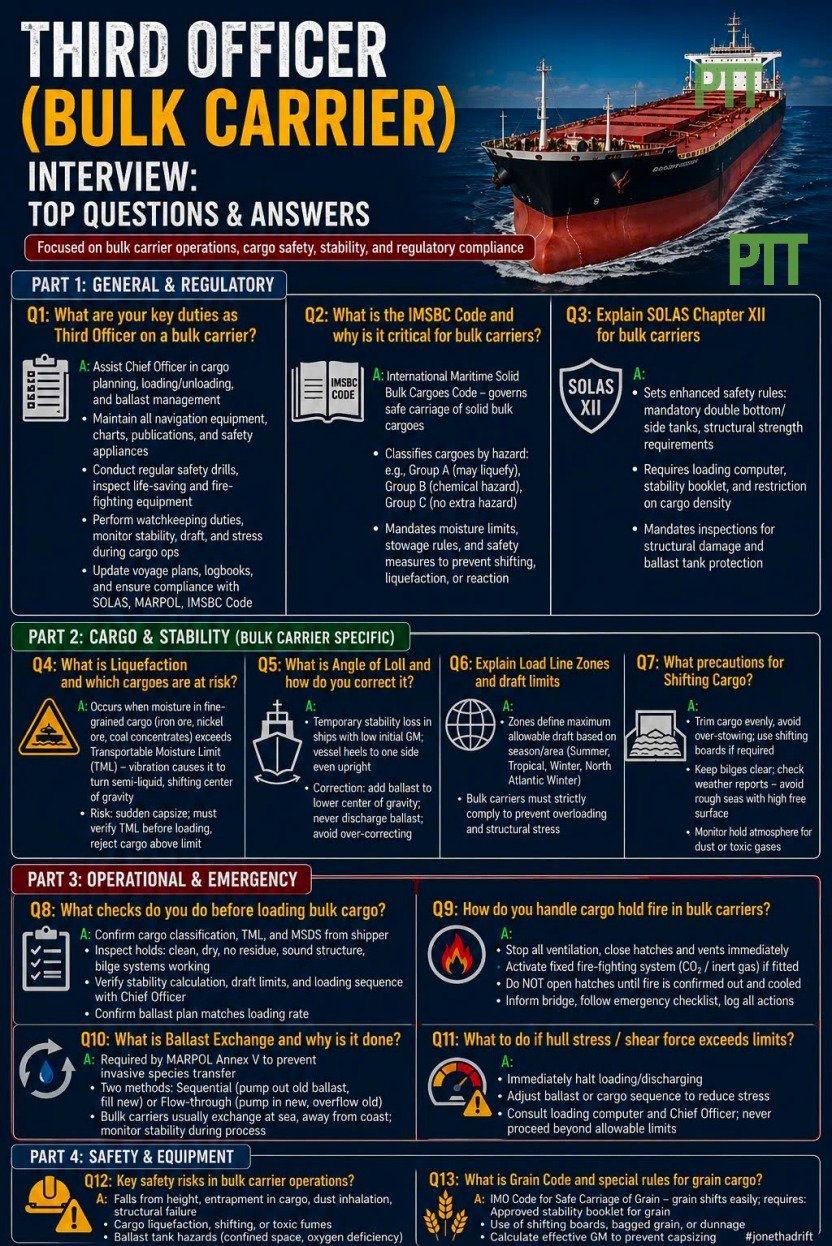
Requires loading computer, stability booklet, and restriction on cargo density
Mandates inspections for structural damage and ballast tank protection
Part 2: Cargo & Stability (Bulk Carrier Specific)
Q4: What is Liquefaction and which cargoes are at risk? A:
Occurs when moisture in fine-grained cargo (iron ore, nickel ore, coal concentrates) exceeds Transportable Moisture Limit (TML) – vibration causes it to turn semi-liquid, shifting center of gravity
Risk: sudden capsize; must verify TML before loading, reject cargo above limit
Q5: What is Angle of Loll and how do you correct it? A:
Temporary stability loss in ships with low initial GM; vessel heels to one side even upright
Correction: add ballast to lower center of gravity, never discharge ballast; avoid over-correcting
Q6: Explain Load Line Zones and draft limits A:
Zones define maximum allowable draft based on season/area (Summer, Tropical, Winter, North Atlantic Winter)
Bulk carriers must strictly comply to prevent overloading and structural stress
Q7: What precautions for Shifting Cargo? A:
Trim cargo evenly, avoid over-stowing; use shifting boards if required
Keep bilges clear; check weather reports – avoid rough seas with high free surface
Monitor hold atmosphere for dust or toxic gases
Part 3: Operational & Emergency
Q8: What checks do you do before loading bulk cargo? A:
Confirm cargo classification, TML, and MSDS from shipper
Inspect holds: clean, dry, no residue, sound structure, bilge systems working
Verify stability calculation, draft limits, and loading sequence with Chief Officer
Confirm ballast plan matches loading rate
Q9: How do you handle cargo hold fire in bulk carriers? A:
Stop all ventilation, close hatches and vents immediately
Activate fixed fire-fighting system (CO₂ / inert gas) if fitted
Do NOT open hatches until fire is confirmed out and cooled
Inform bridge, follow emergency checklist, log all actions
Q10: What is Ballast Exchange and why is it done? A:
Required by MARPOL Annex V to prevent invasive species transfer
Two methods: Sequential (pump out old ballast, fill new) or Flow-through (pump in new, overflow old)
Bulk carriers usually exchange at sea, away from coast; monitor stability during process
Q11: What to do if hull stress / shear force exceeds limits? A:
Immediately halt loading/discharging
Adjust ballast or cargo sequence to reduce stress
Consult loading computer and Chief Officer; never proceed beyond allowable limits
Part 4: Safety & Equipment
Q12: Key safety risks in bulk carrier operations? A:
Falls from height, entrapment in cargo, dust inhalation, structural failure
Cargo liquefaction, shifting, or toxic fumes
Ballast tank hazards (confined space, oxygen deficiency)
Q13: What is Grain Code and special rules for grain cargo? A:
IMO Code for Safe Carriage of Grain – grain shifts easily; requires:


 Dịch
Dịch