
 Dịch
Dịch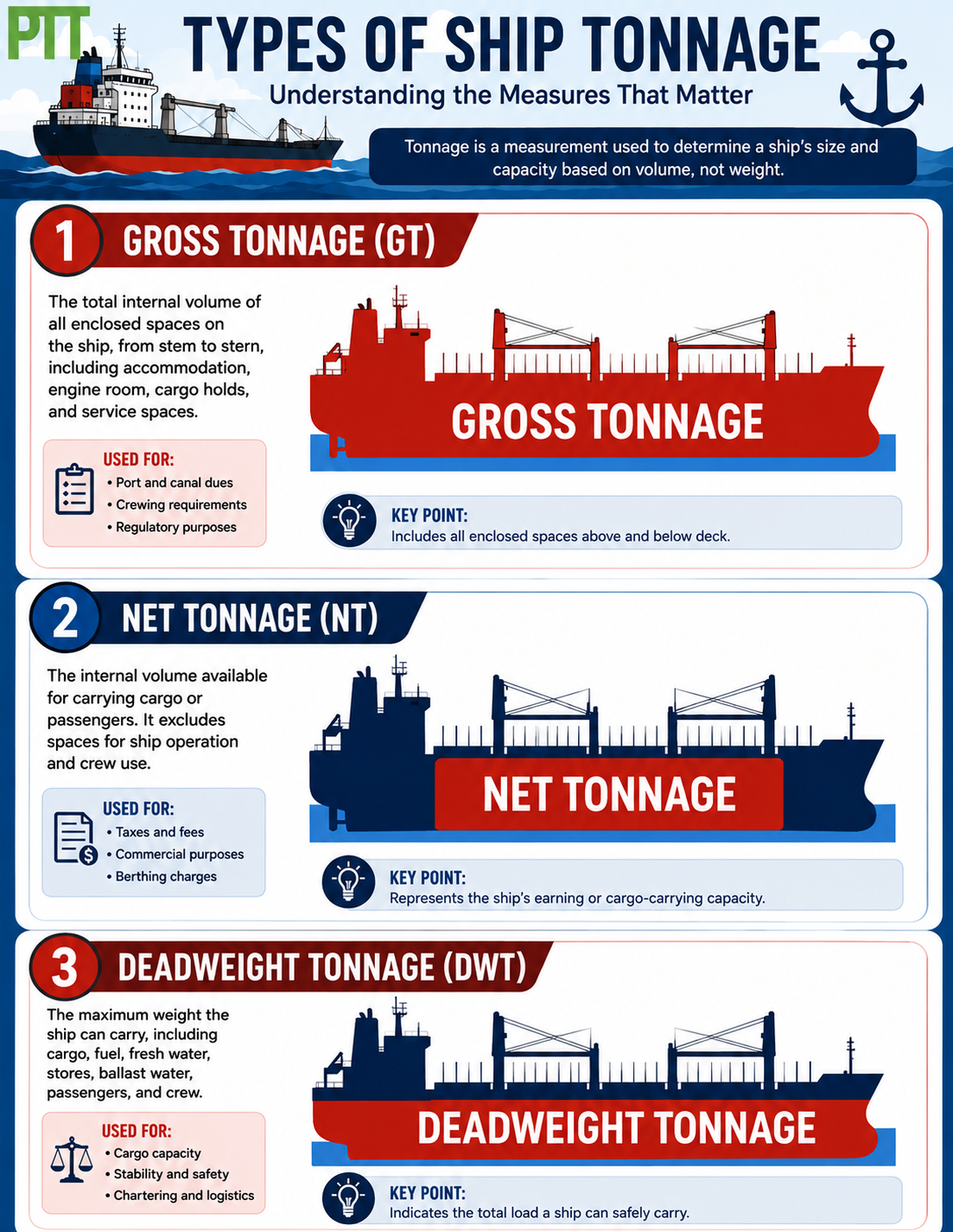

This infographic explains the three main types of ship tonnage used in the maritime industry. Although they all use the word tonnage, they measure different aspects of a ship.
1. Gross Tonnage (GT)
Gross Tonnage measures the total internal volume of all enclosed spaces on a ship, including cargo holds, engine room, accommodation, and other enclosed compartments. It is commonly used for ship registration, port dues, canal fees, safety regulations, and determining manning requirements. GT is a measure of volume, not weight.
2. Net Tonnage (NT)
Net Tonnage represents the usable internal volume available for carrying cargo or passengers. It excludes spaces used for ship operations, such as the engine room, crew accommodation, and navigation spaces. NT is mainly used to calculate port charges, canal dues, and commercial fees, as it reflects the ship’s earning capacity.
3. Deadweight Tonnage (DWT)
Deadweight Tonnage is the maximum weight a ship can safely carry. It includes cargo, fuel, fresh water, ballast water, stores, passengers, and crew. Unlike GT and NT, DWT measures weight, making it an important value for cargo planning, vessel stability, and safe loading.
Key Difference
• Gross Tonnage (GT): Total enclosed volume of the ship.
• Net Tonnage (NT): Volume available for cargo or passengers.
• Deadweight Tonnage (DWT): Total weight the ship can safely carry.
Understanding these measurements is essential for safe operations, regulatory compliance, and efficient commercial shipping.