
 Dịch
Dịch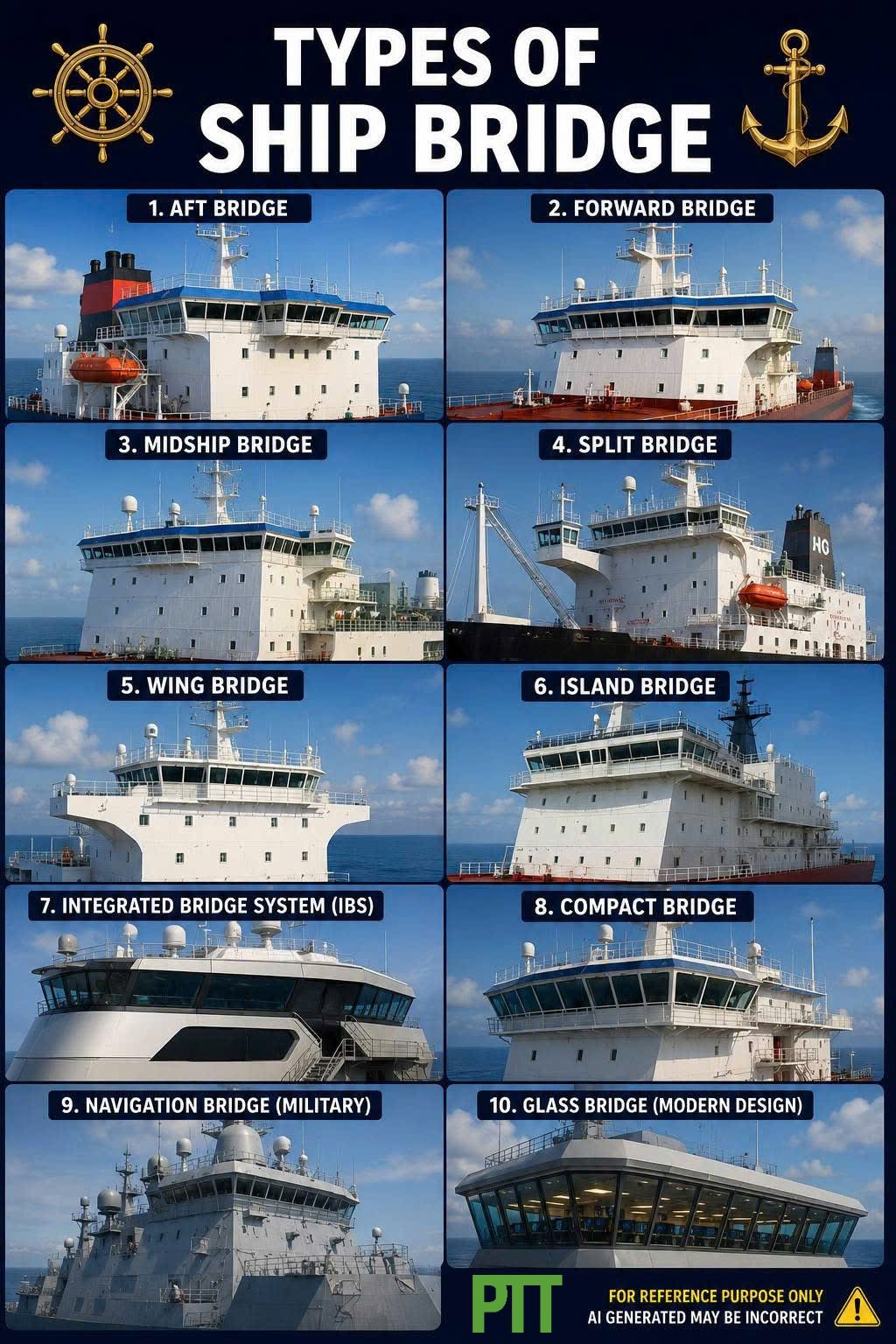
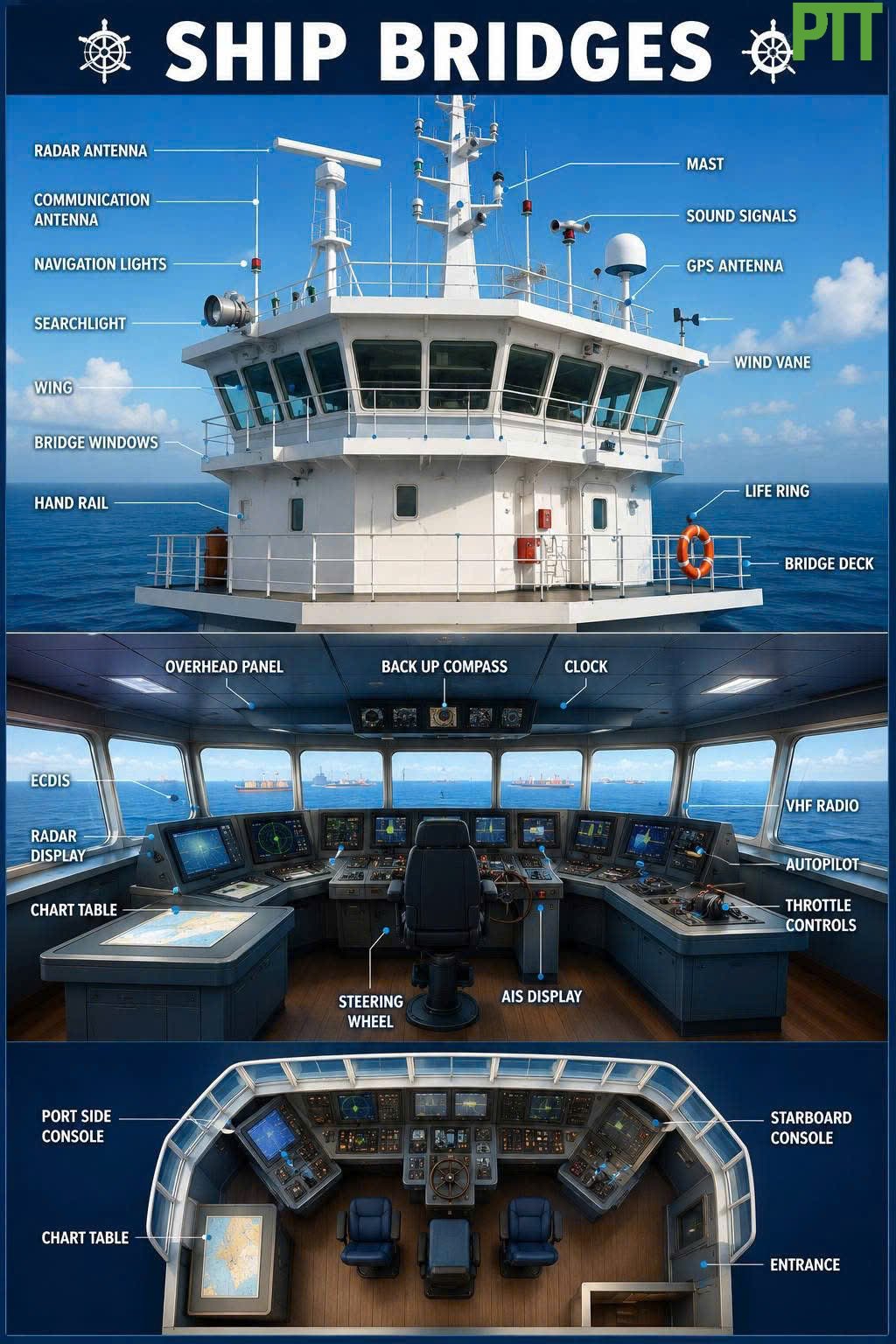
Modern ships use different bridge designs depending on their purpose, cargo type, and operational requirements. The ship's bridge serves as the command center, where officers control navigation, communication, and vessel operations.
1. Aft Bridge – Located near the stern (rear) of the vessel, commonly found on older cargo ships and some specialized vessels. It provides better visibility of cargo operations at the aft section.
2. Forward Bridge – Positioned toward the bow (front) to improve visibility ahead, often used on vessels requiring enhanced forward navigation.
3. Midship Bridge – Located near the center of the ship, offering balanced visibility and improved stability. This is one of the most common arrangements on merchant vessels.
4. Split Bridge – Features separated operational areas for navigation and ship management, improving workflow and reducing congestion during critical operations.
5. Wing Bridge – Includes extended platforms on both port and starboard sides, allowing officers to observe the ship's sides during docking and maneuvering.
6. Island Bridge – A standalone superstructure commonly seen on offshore vessels, naval ships, and some specialized cargo vessels.
7. Integrated Bridge System (IBS) – Combines radar, ECDIS, AIS, autopilot, and communication systems into a centralized digital workstation, significantly improving situational awareness and efficiency.
8. Compact Bridge – Designed for smaller vessels where space optimization is essential while maintaining all critical navigation equipment.
9. Military Navigation Bridge – Built for naval operations with advanced surveillance, tactical communication, and combat management capabilities.
10. Glass Bridge (Modern Design) – Features extensive glass panels and highly automated systems, providing excellent visibility and supporting next-generation smart shipping technologies.
As maritime technology continues to evolve, ship bridges are becoming increasingly automated, integrating artificial intelligence, digital navigation systems, and real-time data analytics to enhance safety, efficiency, and environmental performance across the global shipping industry.